

You know I enjoy my dark and moody florals. I’m sure I’ve written about them before, so any opportunity to bring them up again I’ll take! This time I wanted to add 5 tips if you’d like to try out a similar approach to me.
1. Look for a Dark Background
To make a flower stand out with all that colour the last thing you want to do is allow your background to compete for visual attention. Therefore a dark background where light is low allows for bolder foreground colours to stand out and ‘blossom’.
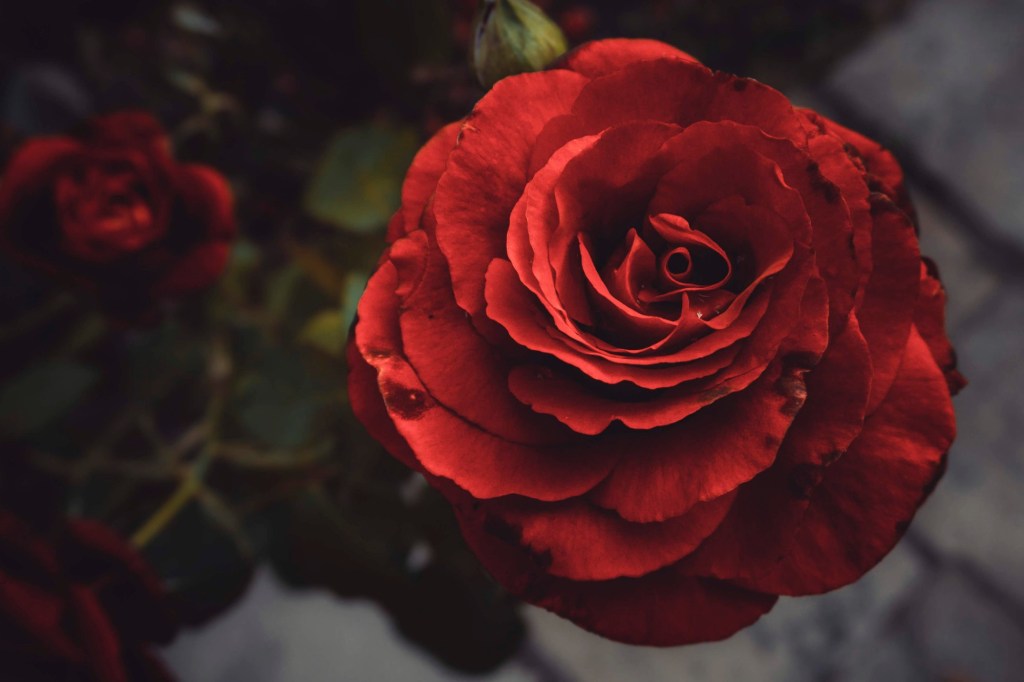
Position yourself so that the background of your flower is darker in exposure than the flower. If you’re struggling then consider using a piece of blackboard/card and place it behind the flower to cut out the background entirely and make it more of a fine art piece instead.
2. Pick Out One Flower
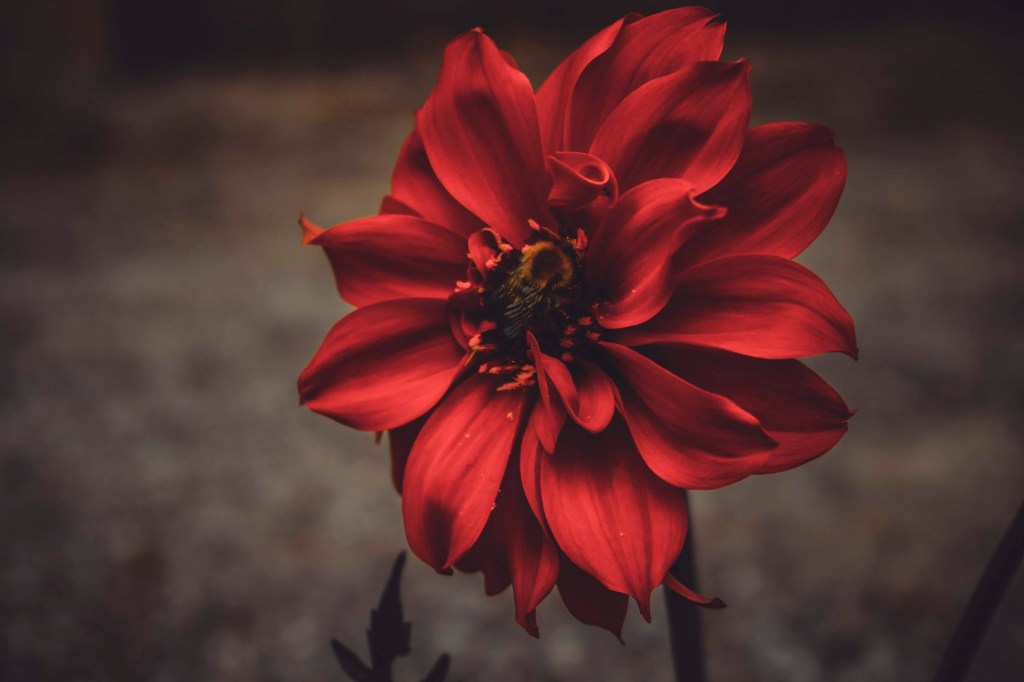
Our minds like order and peace – busy scenes take thought and processing of a story. Flowers are symbol of serenity and therefore work better when photographed on their own to solidify this moody atmosphere I love to edit in.
By all means, you can have blurred echoes of other flowers in the background but the focus point and main subject of the story should only be on one flower to make the story simpler and less cognitively demanding.
3. Use Small Spot Focus and Metering Modes
With a small subject such as a flower, I tend to find using a small spot focus mode and spot metering the best combination. Centre all your attention on the flower as the background is superfluous to the story.
This means that the focus point will be in the middle of the frame and the exposure reading is taken from the centre too. You may need to compose your shot centrally, lock in the focus and exposure, and then recompose to suit the composition.
By default spot, focus modes are generally the norm in most cameras but do a double check. You may have to change to spot metering as Matrix/Evaluative tends to be the default there.
4. Use a Wide Aperture (but not the widest)
Wide apertures and shallow depth of fields for floral photography look great but there is a risk of going ‘too wide’. While the lens allows for apertures to F/1.4 or even F/1.2 focus tends to be very, very tricky to control and maintain at these settings.
The sweet spot is a F/stop where your lens is deemed the sharpest by the manufacturer. Typically the sweet spot is 2 full F/stops down from your widest aperture. i.e. if your lens’s max aperture is F/2.8 then your sweet spot should be F/5.6.

5. Use Presets…with caution
I do use presets, many photographers do and don’t feel shamed by this if you do too.
I know a lot of photographers online think presets are lazy and superficial and everyone ends up with the same type of shots. This isn’t true – provided you don’t stop after one click.
Presets are not a one-click solution at all. There is no way that the person who created the preset designed it exactly for the shot you’re editing. Therefore you’ll need to make some suitable tweaks.
I do have 2 presets I use a lot but only as a starting point. It helps me darken my background, turn my greens to red and reduce the highlights to reveal more details. From there I go in much deeper and use adjustment brushes and blur filters to enhance the shot further to my liking.
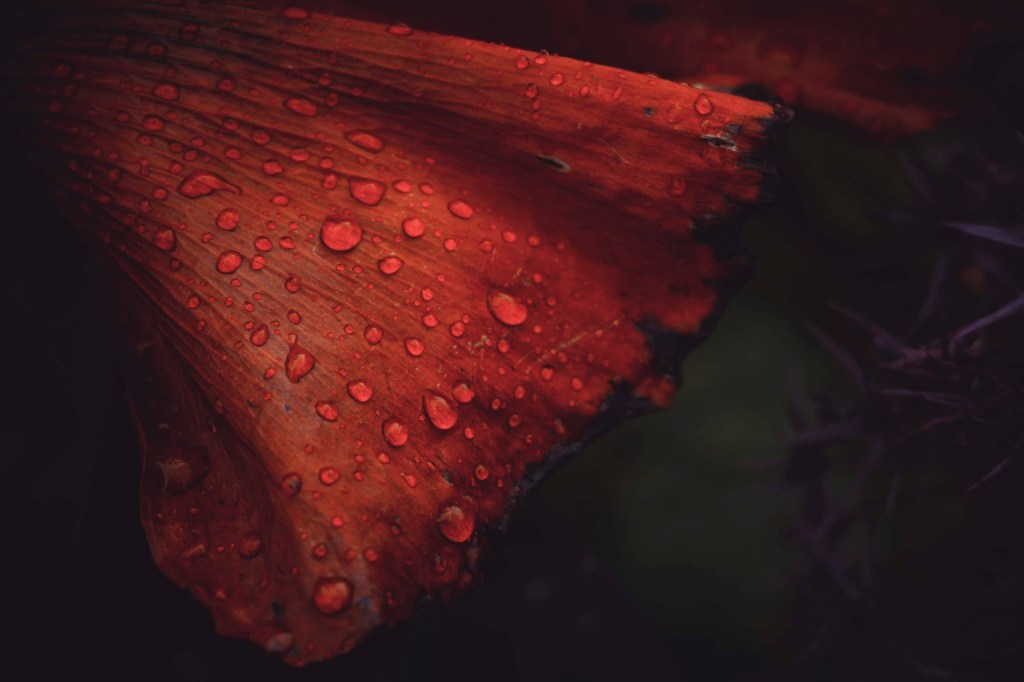
Each image has a consistent style overall but they aren’t all exactly the same.
If you’ve been trying out your own moody floral photos then I’d love to see them and hear about your experience.
 Stephen Walton Photography
Leave a Comment