Autumn Photography Tips: Five Things Worth Going Out For
Summer packs up, the leaves start turning, and a lot of people quietly put the camera in a drawer until spring.
Don’t. Autumn is the easiest season of the year to come home with something good. The sun sits low all day instead of just at the ends, the colour does half your work for you, and the light through mist is free drama.
Here are five things worth going out for.
1. Photograph the colours properly
Everyone says “autumn colour” and photographs an orange tree.
Look closer. On one small patch of ground there’ll be orange, red, yellow, deep brown and stubborn green, often on the same branch. That range is the actual story of the season, and a wide shot of a whole tree flattens it.
So get close. Gather a handful of different leaves, overlap them, and photograph them properly — on the kitchen table on a dark background is absolutely fine. A macro lens picks up the veins and the dry edges beautifully, but a normal lens up close will do.
Done well that’s a still life good enough to frame, made from something you picked up on a walk.
2. Woodland paths
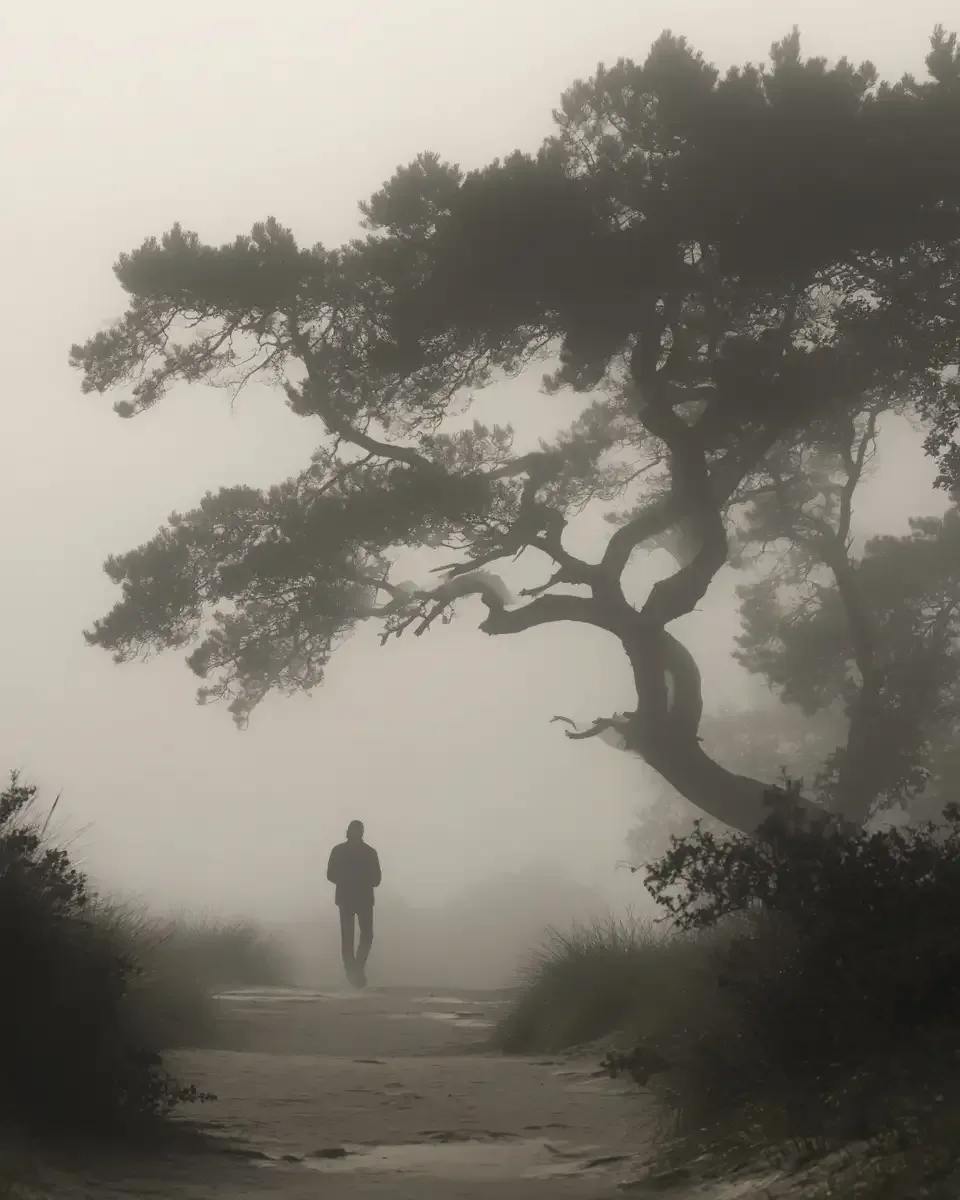
A path is a leading line that somebody else has already built for you.
Find one that bends rather than one that runs straight, because a bend makes people wonder what’s round it. Then choose your height deliberately:
- Get low and the path spreads wide across the bottom of the frame. It pulls the viewer in fast.
- Get high and you can follow the whole line as it winds away.
Low mist helps enormously here. It separates the near trees from the far ones and gives you depth without doing anything clever.
3. Autumn flat lays
Take a piece of plain card, put your camera directly overhead, and arrange what you’ve collected on it.
Leaves, pine cones, conkers, a few beech husks. Shoot straight down at ninety degrees, keep the light soft and even, and don’t overfill it — gaps are what make it look considered rather than tipped out of a bag.
It’s an indoor job for a wet afternoon, which autumn provides generously.
4. Portraits, while everyone’s wrapped up
Woolly jumpers, wellies, and puddles. Autumn hands you props.
If there’s splashing involved, switch to shutter priority and set something fast — around 1/1000 will freeze the water mid-air. Slower than that and the drops smear into streaks.
Then try being a bit less literal. Hide a face behind a big leaf. Photograph only hands, or boots, or the back of a head. You can tell somebody’s whole afternoon without ever showing their face, and it’s usually a better picture than the one where everyone says cheese.
5. Long exposure on water
If you find a stream, get the tripod out.
A long exposure turns moving water silky and leaves the rocks sharp, and that contrast between soft and hard is the whole appeal. You’ll want a few seconds, which on an autumn afternoon under trees is often achievable without any filters at all.
Two extras if the light is tricky: bracket three frames and merge them later to hold both the bright sky and the dark water, and try focus stacking if you want the near rocks and the far bank both sharp.
What to actually pack
Nothing exotic. A tripod if you want the water. A cloth, because autumn is wet and lenses fog. And spare batteries, because cold air empties them faster than you expect.
Go on a still morning after rain if you can pick your day. Wet leaves are saturated leaves, and mist burns off by mid-morning, so early is worth the alarm.
The season is short. That’s rather the point of it.
Thanks for reading. If it was useful, come and say hello — I post the photographs that do not make it onto here, and I answer everything.
— Stephen