
Southport prints
Twenty photographs of this town and this coast, taken by someone who lives here rather than someone passing through. Printed on 234gsm matte paper and sent to you from £35, delivery included.
1,108 metres of it, and only Southend is longer
Southport Pier opened on 2 August 1860. It was one of the first iron piers ever built and it is generally reckoned to be the first proper pleasure pier, put up not to land cargo but to walk on. At 1,108 metres it is the second longest in Britain, behind Southend.
It is also, at the time of writing, shut. It has been closed since December 2022, when a winter storm made plain how far the decking had gone. Sefton Council has since secured £20 million from the government to put it right, and the work is under way.
Which changes how you photograph it, and not entirely for the worse. You cannot walk out along it, so you shoot it from the sand, from the promenade, from the side. You end up looking at the whole thing rather than the view from halfway down it, and the legs of a pier at low tide are a better subject than most people realise.
Most of the photographs here are of the pier from underneath it, alongside it, or reflected in whatever water the tide has left behind.
Opened 2 August 1860 · 1,108 metres · second longest in Britain · closed since December 2022, under a £20 million restoration
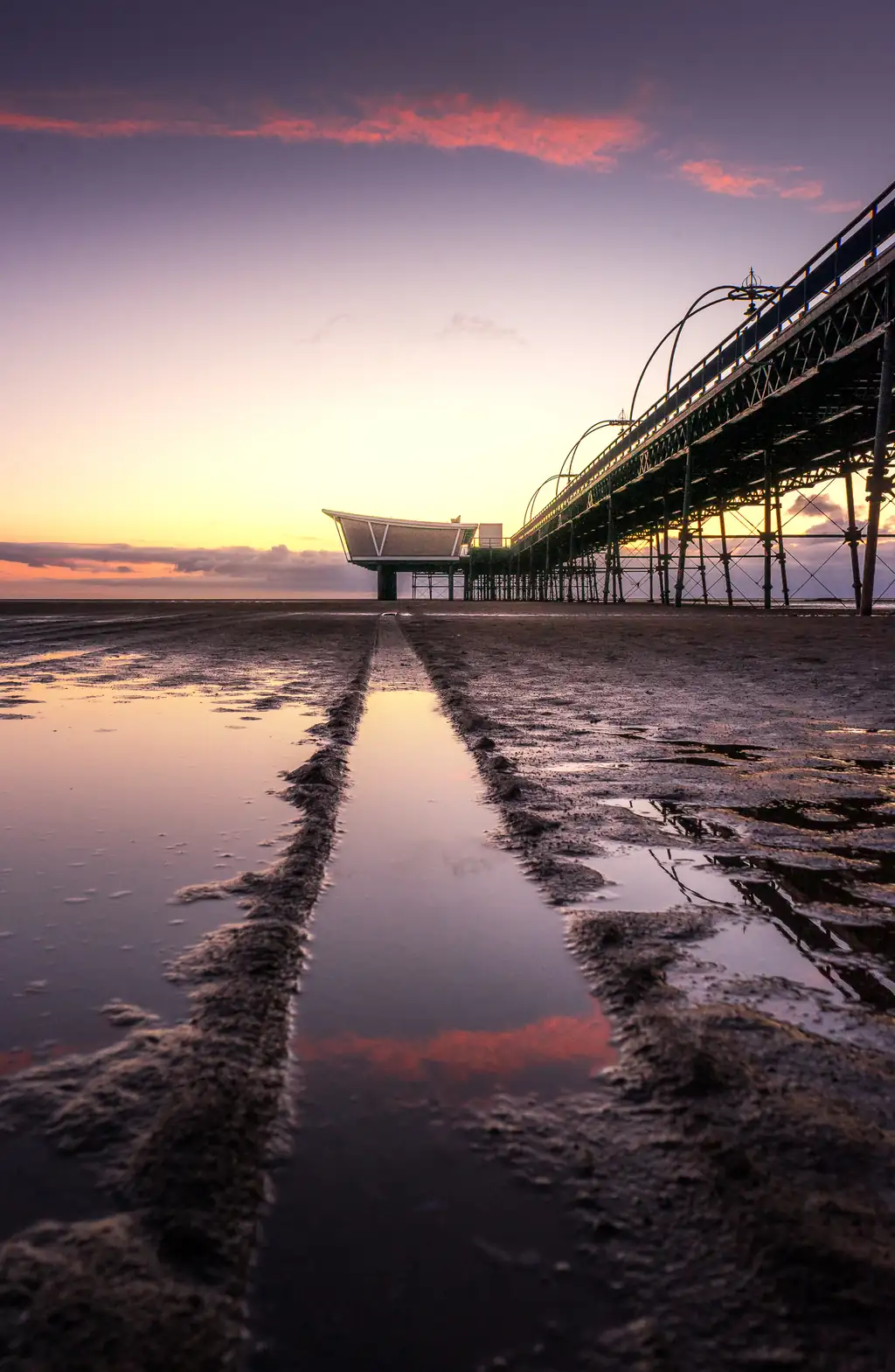 Plate 02
Low Tide at Dusk
Southport Pier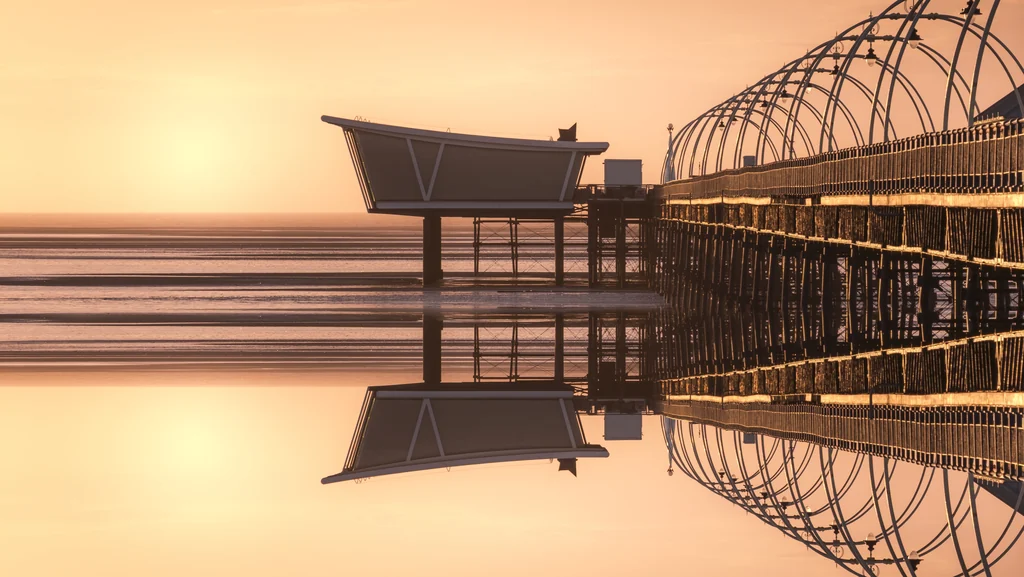 Plate 04
Pavilion in the Mirror
Southport Pier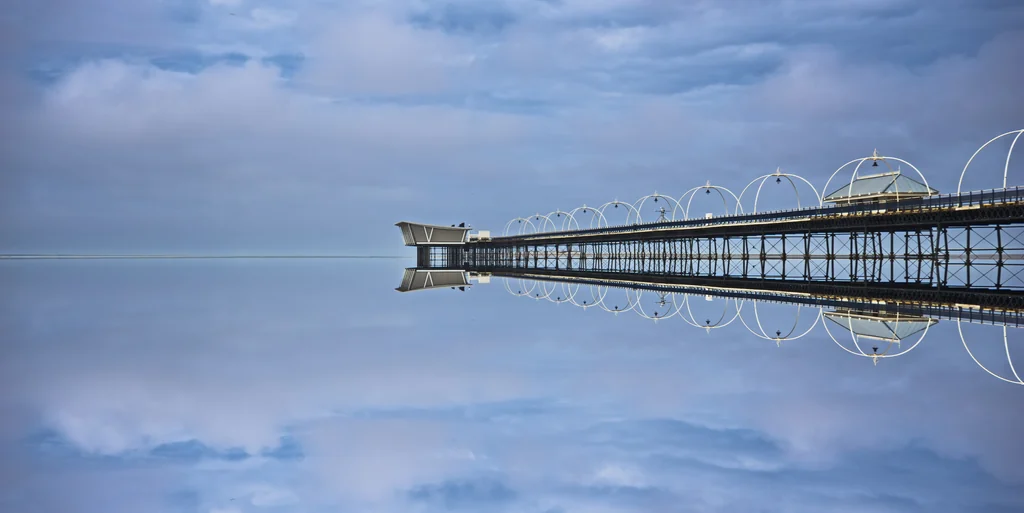 Plate 07
Straight Down the Pier
Southport Pier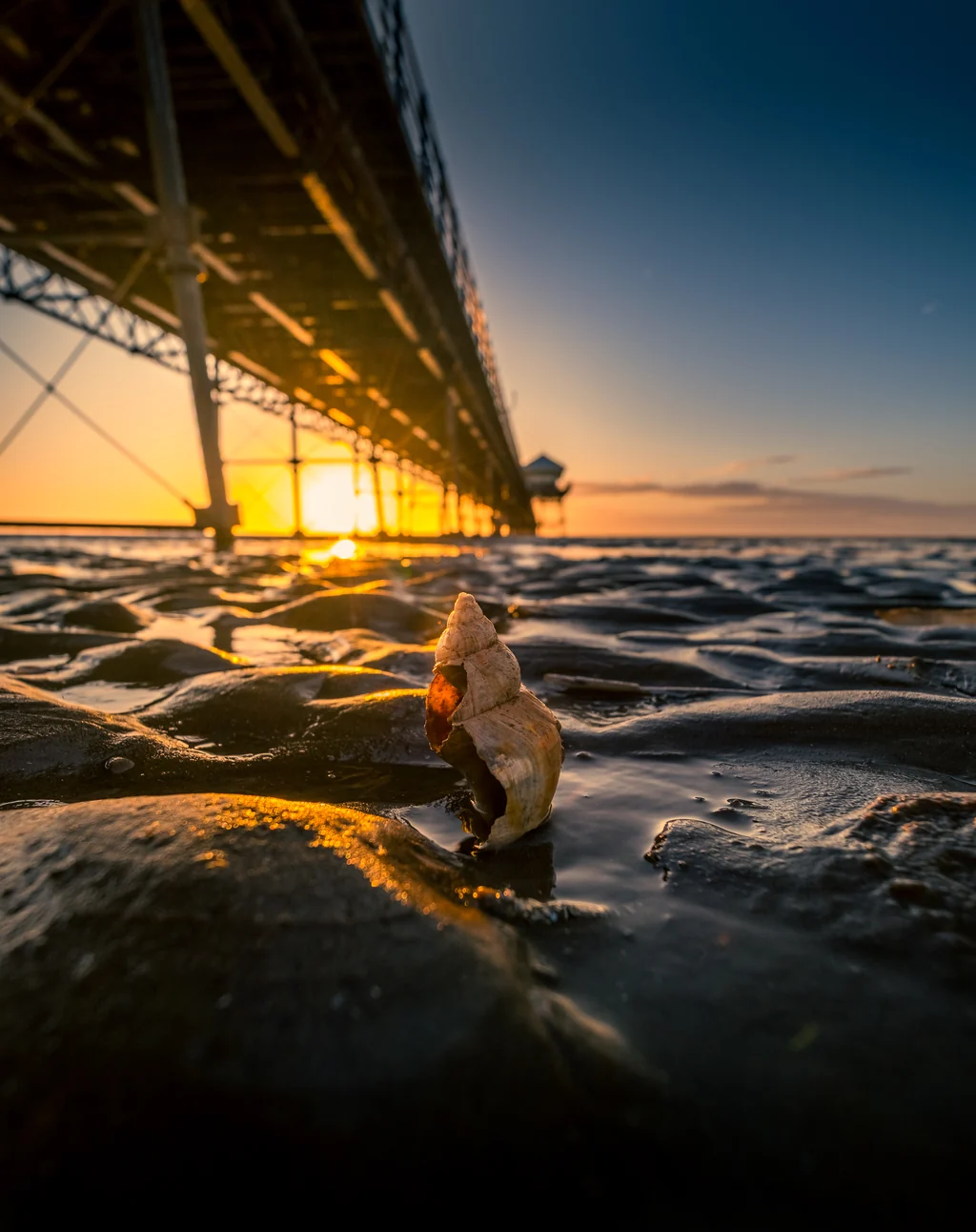 Plate 08
Sunstar and Shell
Southport Pier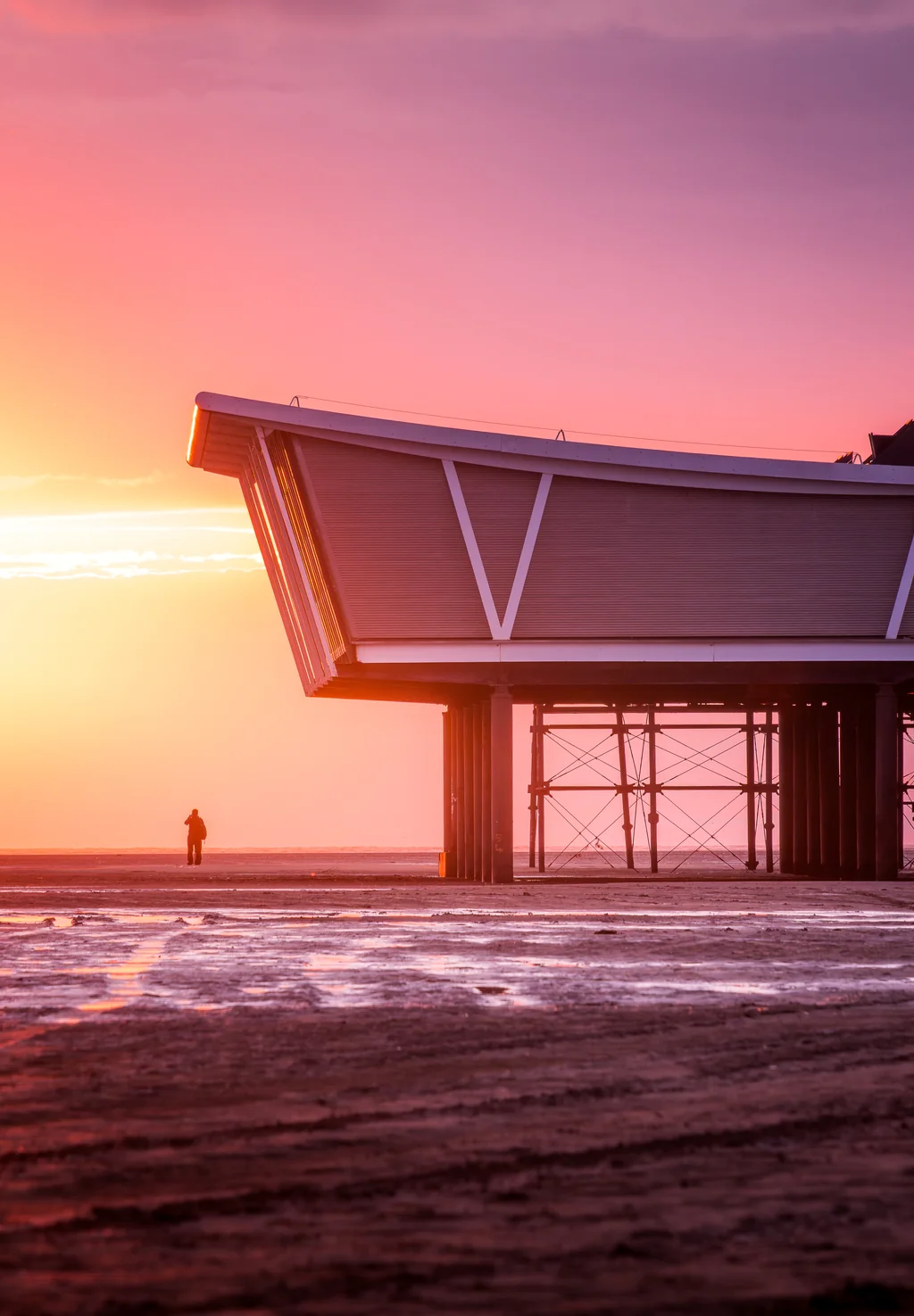 Plate 13
The Last Walk of the Day
Southport Pier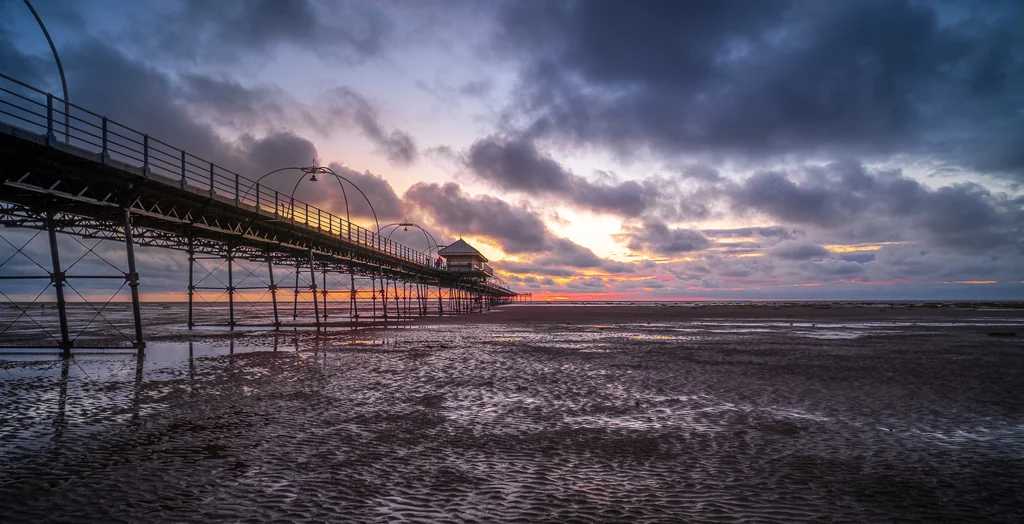 Plate 15
The Long Walk Out
Southport Pier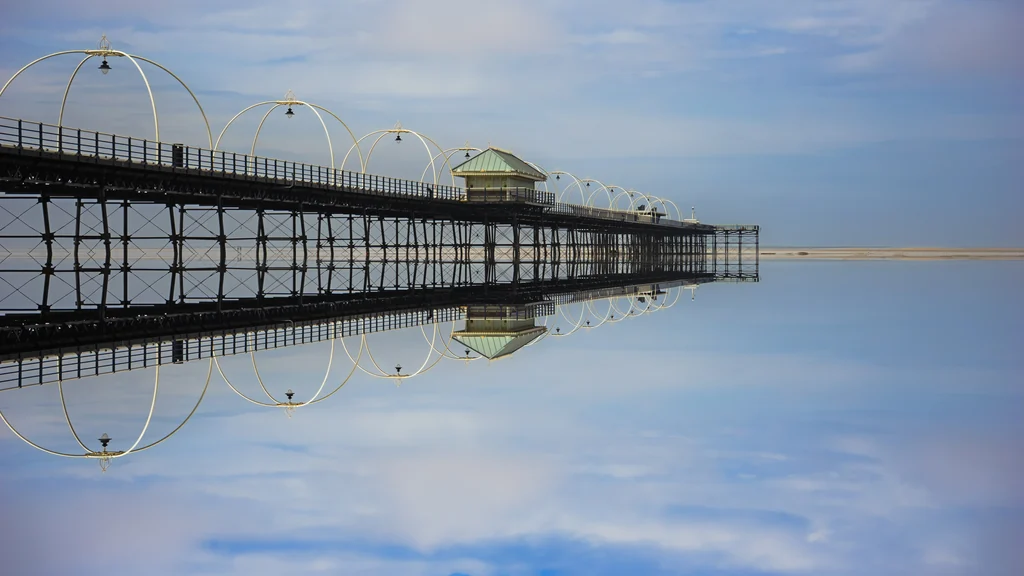 Plate 16
The Pier, Mirrored
Southport Pier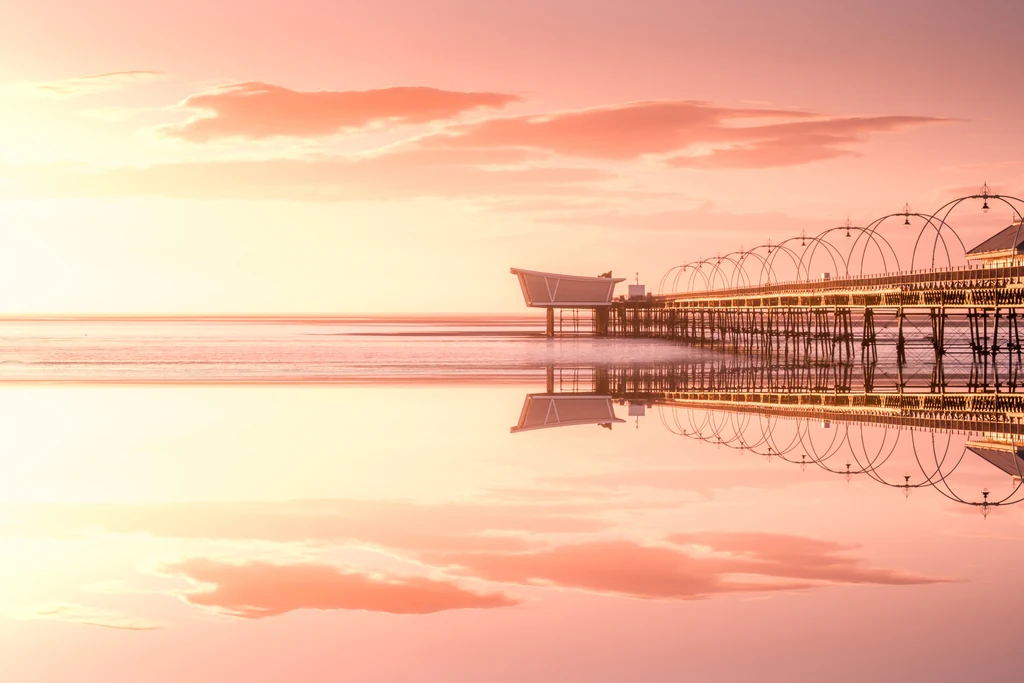 Plate 17
The Pink Hour
Southport Pier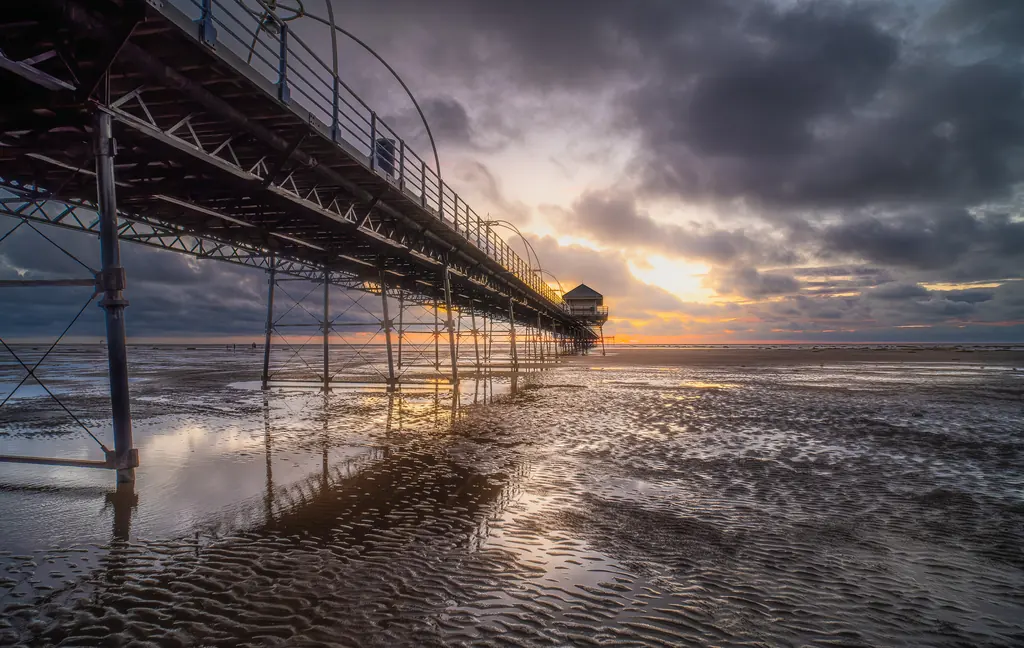 Plate 20
Under a Southport Sky
Southport PierA town that began with an innkeeper and a bathing house
There was nothing here to speak of until 1792, when an innkeeper from Churchtown called William Sutton put up a bathing house on the sandhills at South Hawes. He followed it with an inn he called the South Port Hotel. There was no port. The name stuck anyway, and a town grew round it.
Lord Street is what came next: a wide boulevard of a shopping street, set back behind trees and glass verandahs, which is not how English seaside towns usually look. There is a long-told story that Louis Napoleon lived on it during his exile and took the idea back to Paris with him when he rebuilt the city. Nobody has ever proved it. It is a good story and Southport is not about to stop telling it.
The Marine Lake sits between the town and the sea, which tells you something about how far the sea goes out here. At low tide the water is a long walk away across flat wet sand, and the whole beach turns into a mirror. That is the reason half the photographs on this site exist.
Victoria Park holds the Southport Flower Show every August, the largest independent flower show in the country. The Atkinson, the Victorian gallery and library on Lord Street, is worth an hour whatever the weather is doing.
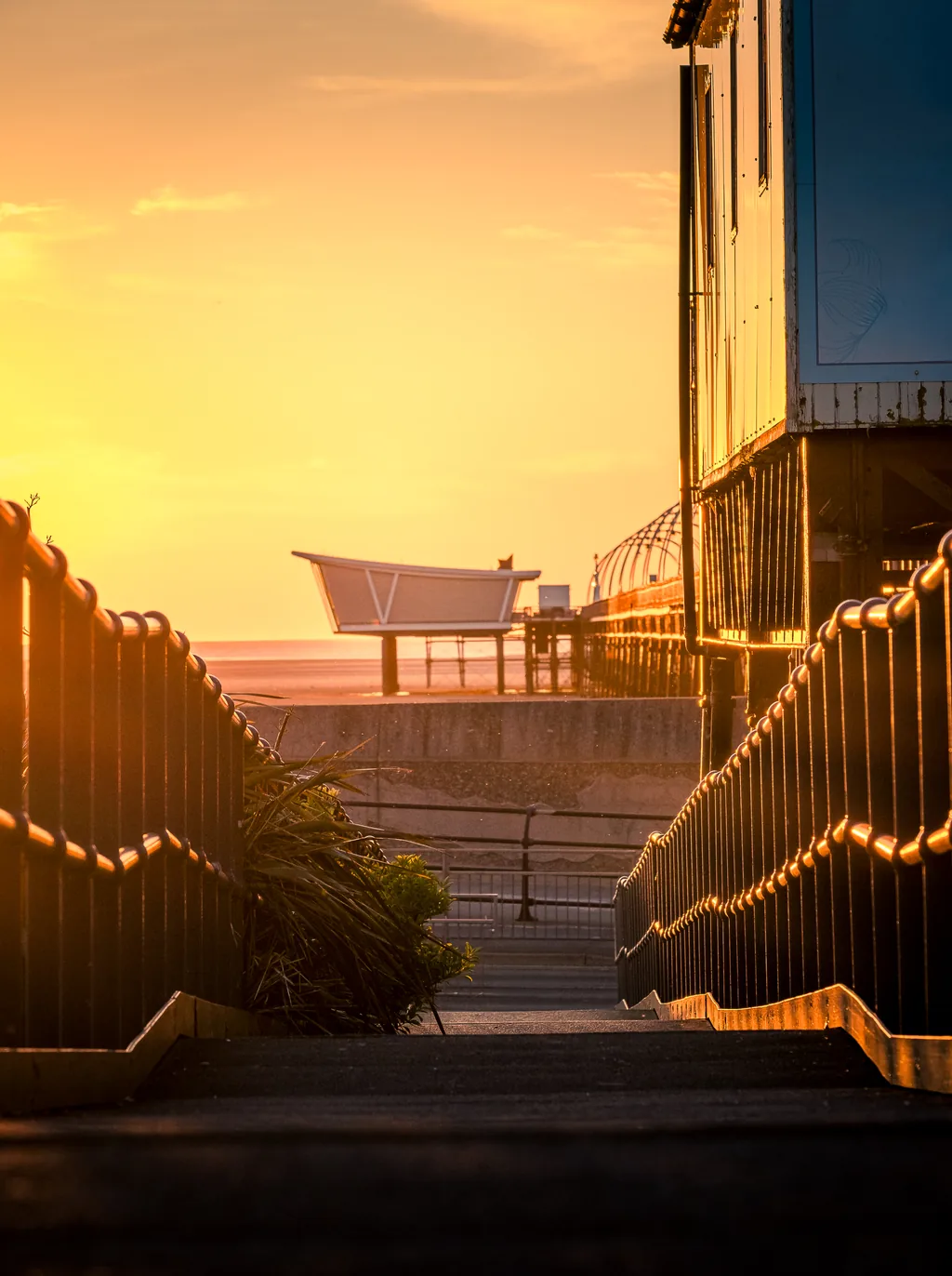 Plate 01
Down to the Front
Southport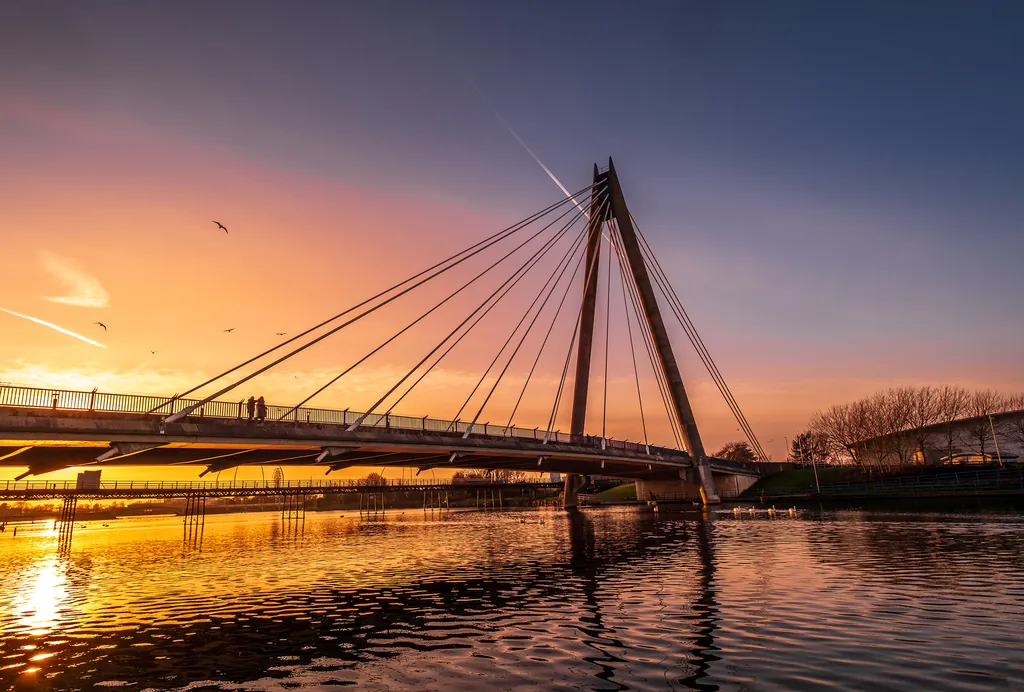 Plate 03
Marine Way Bridge at Sunset
Southport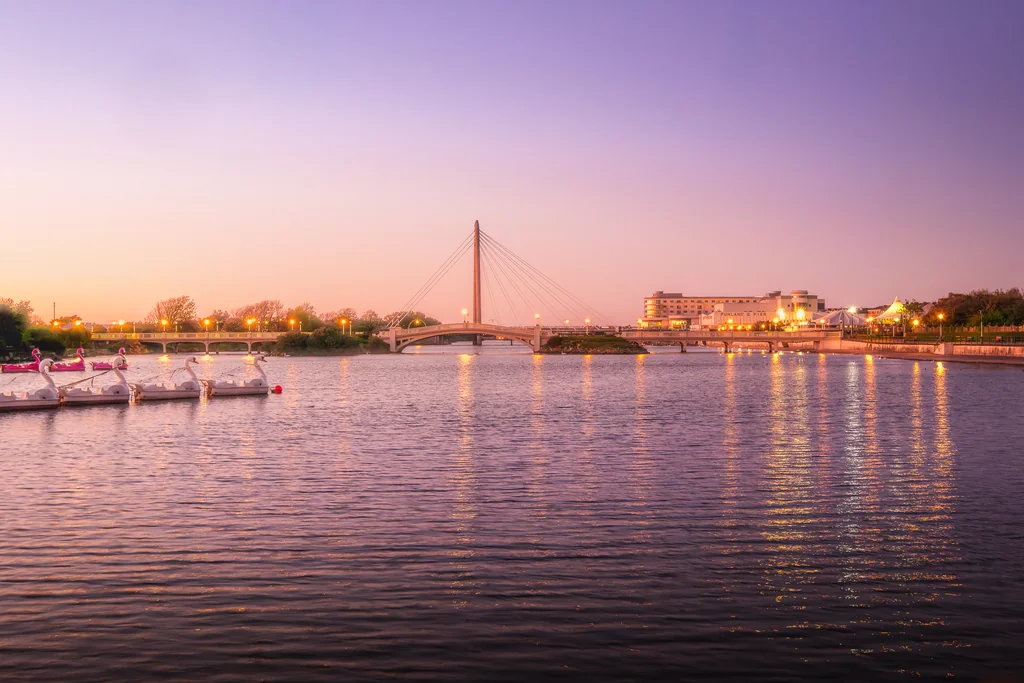 Plate 06
Southport, Lit Up
Southport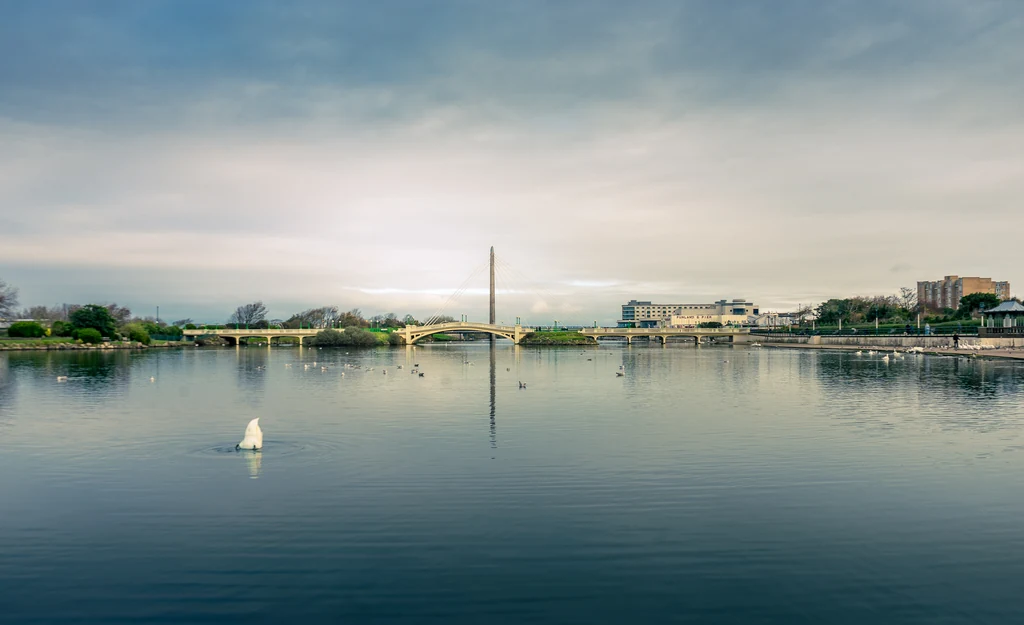 Plate 09
Swan on the Marine Lake
Southport Marine Lake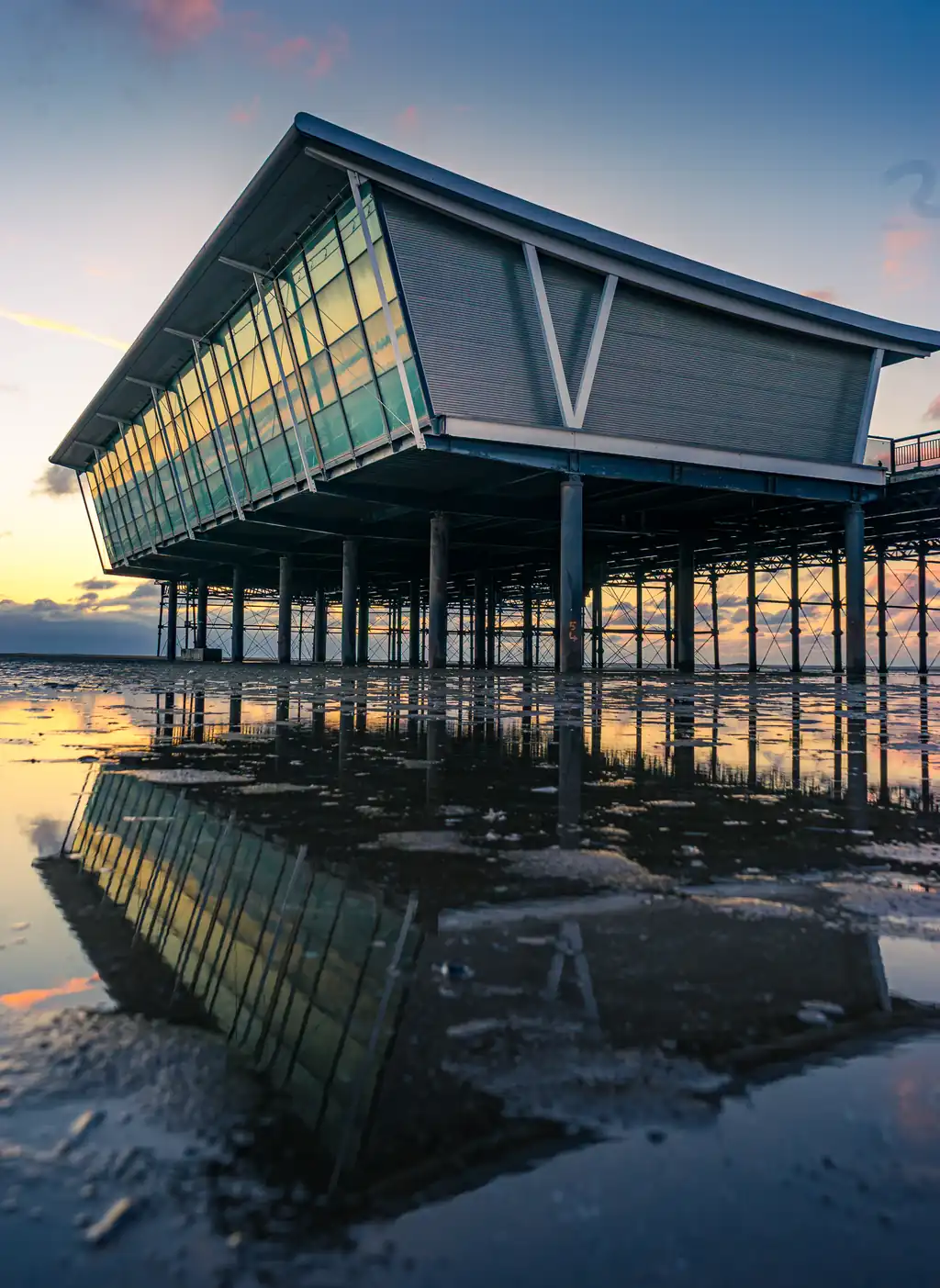 Plate 11
The Glass Pavilion
Southport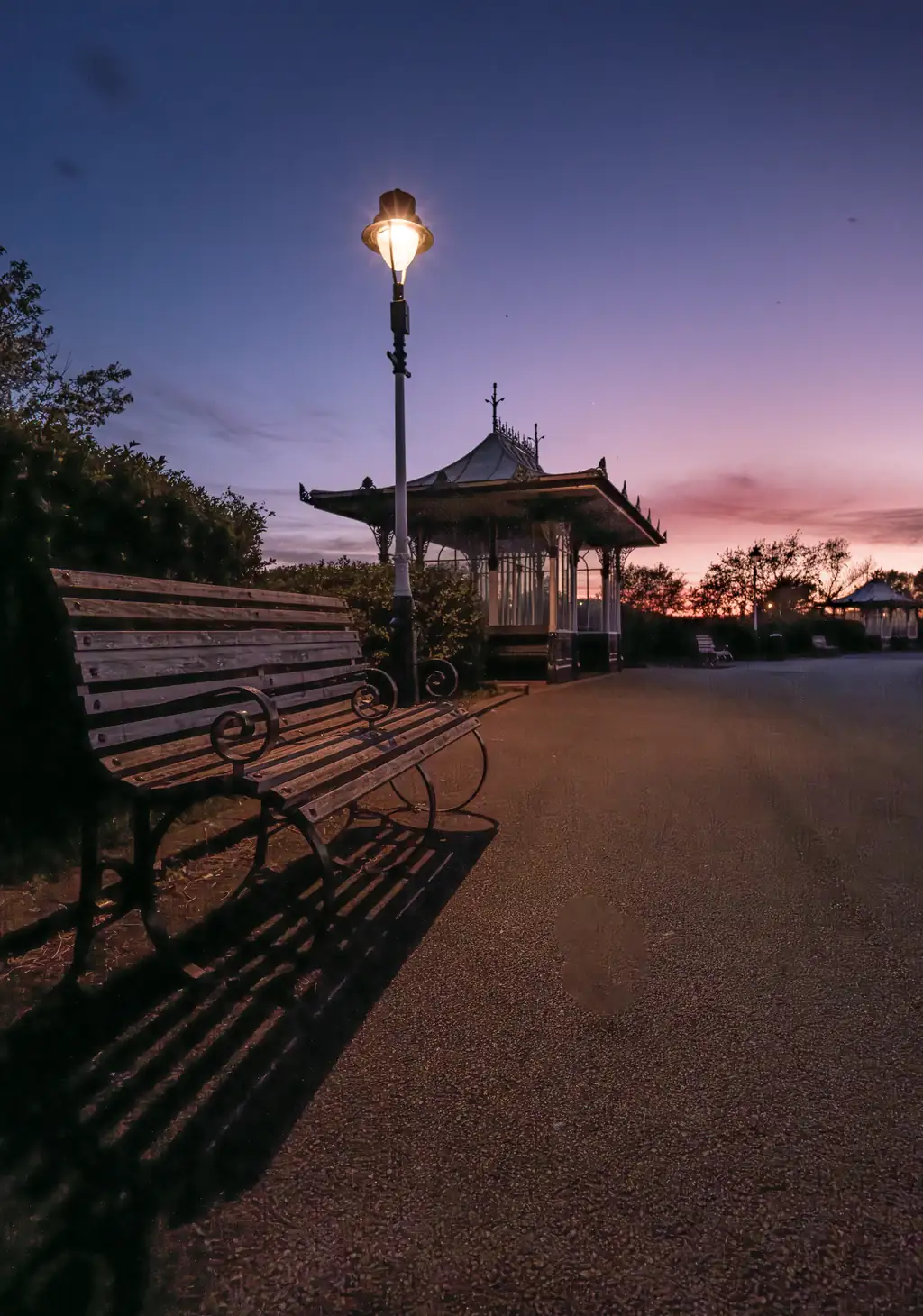 Plate 12
The Lamp on the Promenade
Kings Gardens, by the Marine Lake, Southport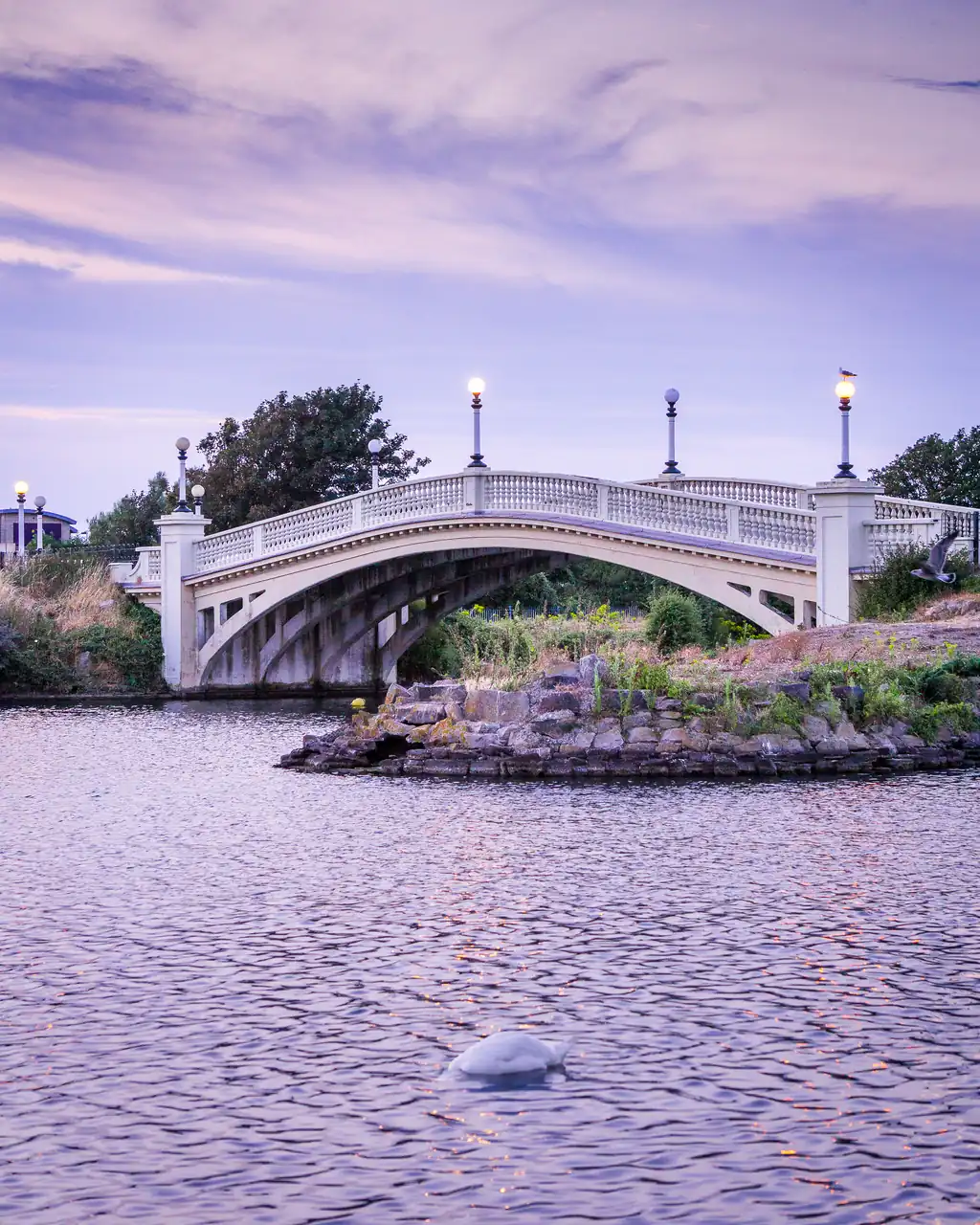 Plate 18
The White Bridge
The Venetian Bridge, Marine Lake, SouthportNatterjack toads, red squirrels, and footprints seven thousand years old
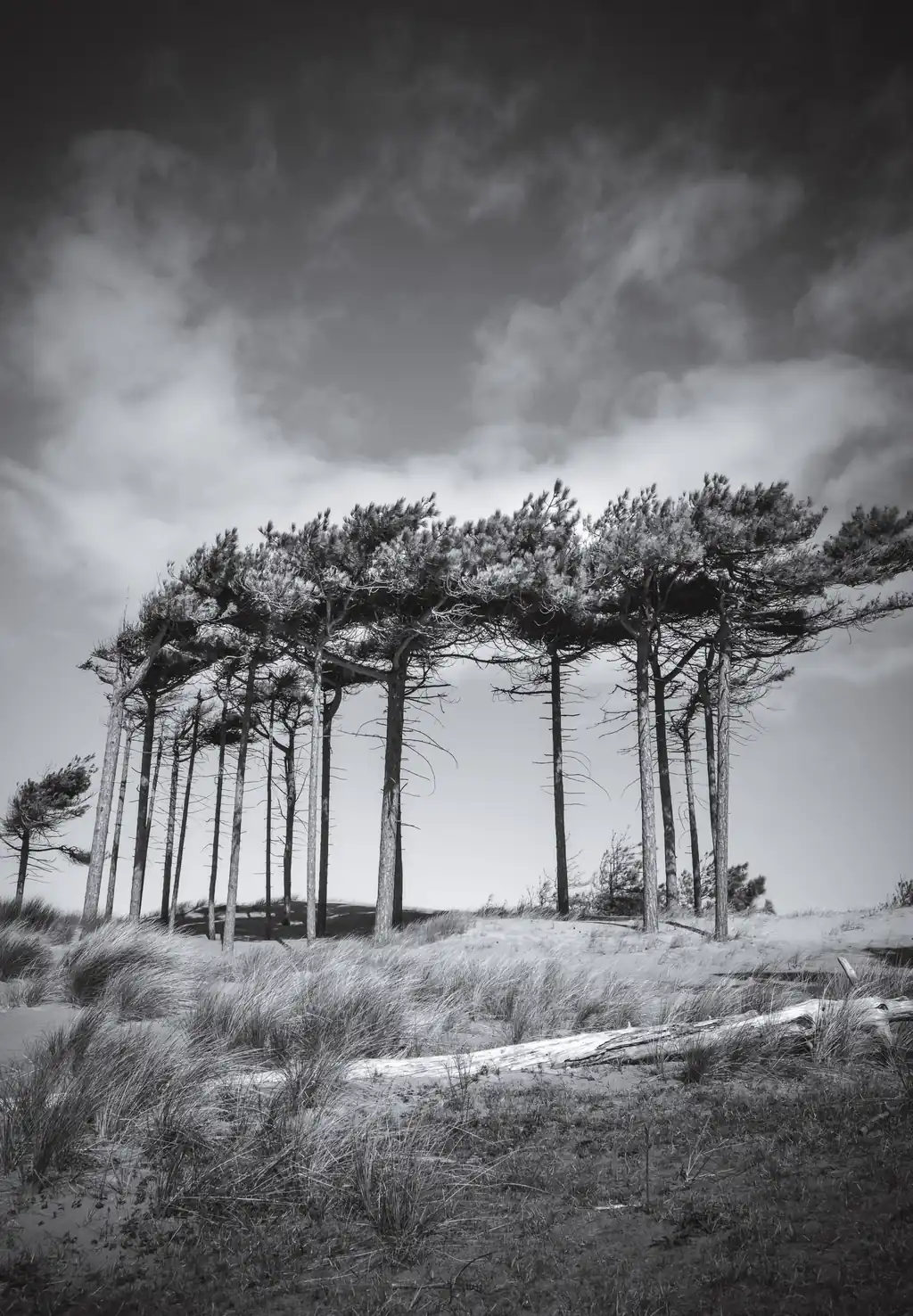
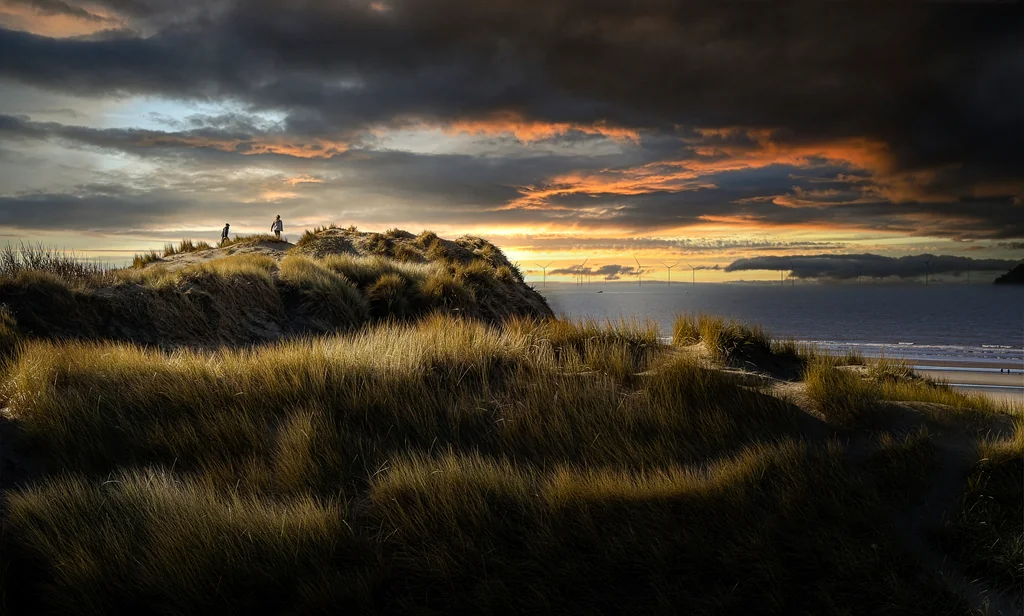
Go south along the coast from Southport and the town gives out into miles of dunes. Ainsdale is a national nature reserve and a Ramsar site, one of the few places in England where natterjack toads and sand lizards still breed. In the marram at dusk it is about as far from a seaside resort as you can get while still being able to see one.
Further on is Formby, where the National Trust looks after the pinewoods and the red squirrels in them. In June 2016 the eroding beach there gave up more than fifty human footprints, left in the mud around seven thousand years ago.
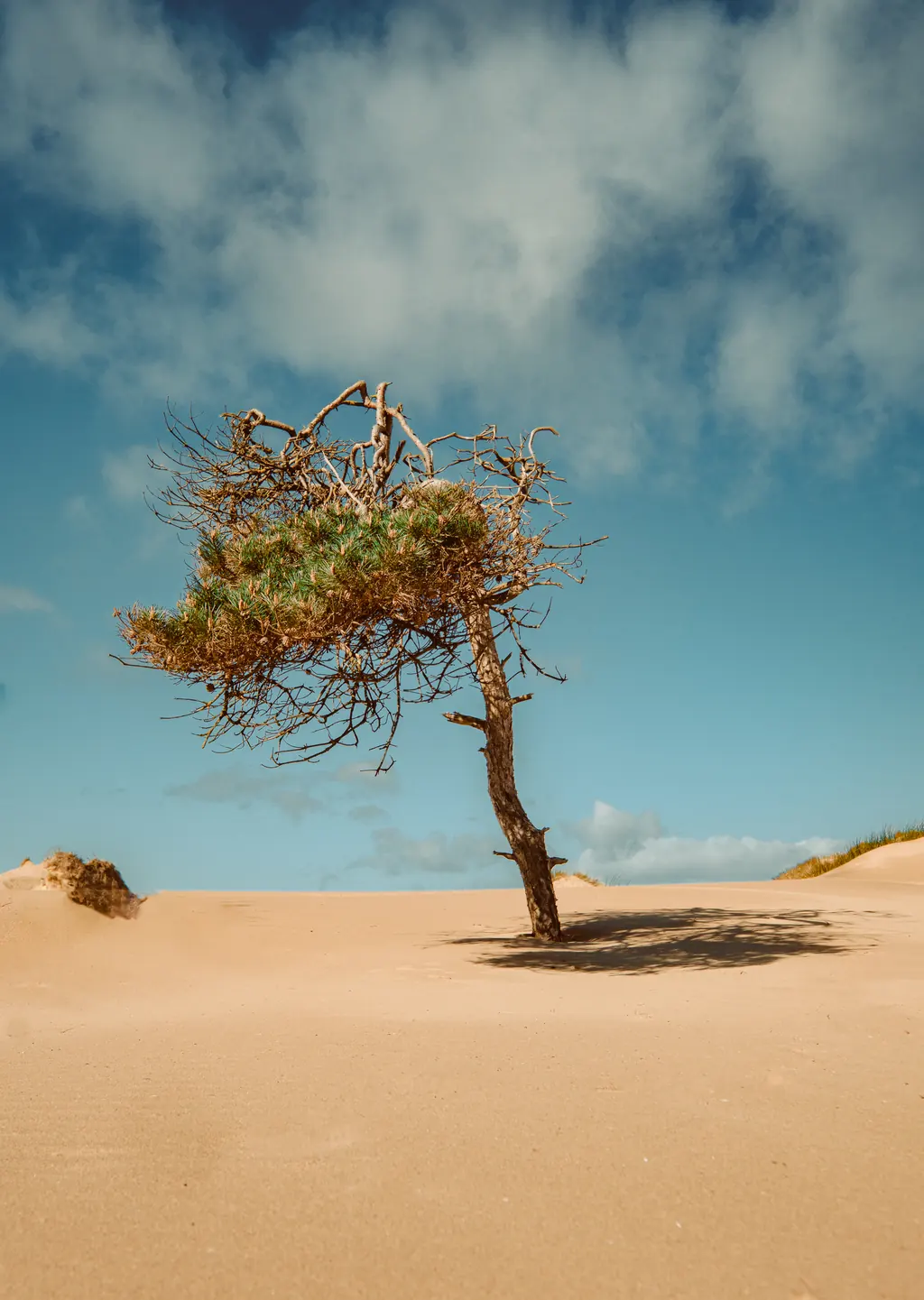
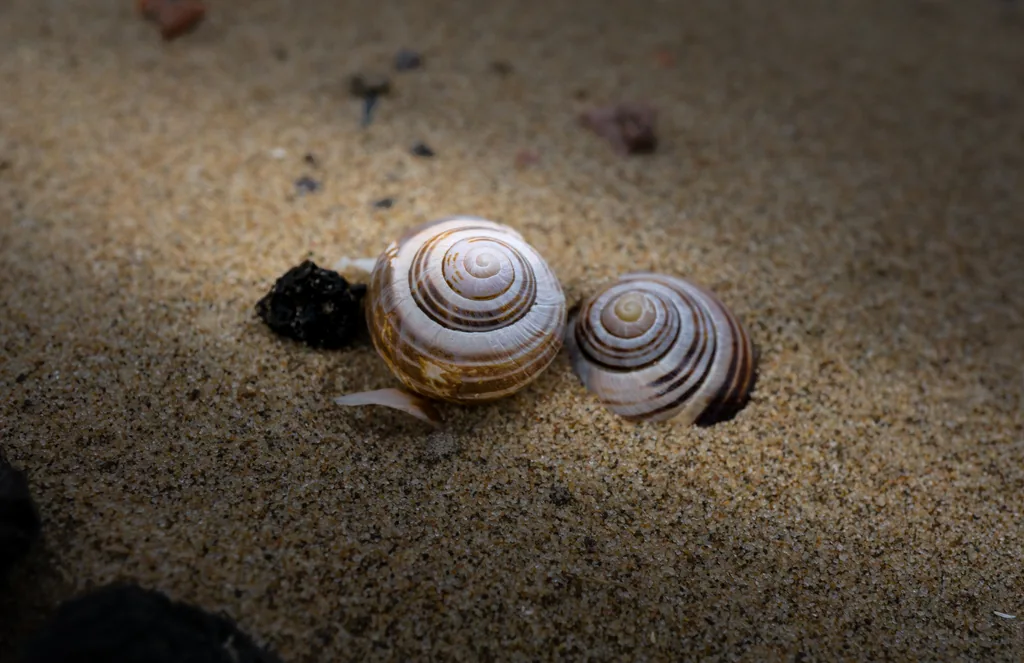
It is a landscape that will not sit still. The dunes move, the tide rearranges the sand every day, and nothing you photographed last month is quite where you left it. You go back to the same spot and get a different picture, which is either maddening or the entire point depending on the morning.
Whichever it is, it means this stretch of coast never runs out. Twenty photographs in and I have barely started on it.
All twenty, in three sizes
Every print is on 234gsm matte paper, unmounted so you can frame it your way, and sent direct from the printers. £35 to £65, delivery included.
See the whole collection