Sunset Photography Settings: What to Change and When
You stand on the sand. The sky does something ridiculous. You lift the camera, press the button, look at the back of it, and there it is: a grey smudge with a bright dot in the middle.
Welcome to the oldest disappointment in photography.
Here’s the thing nobody tells you. Your eyes are not a camera. They dart about, adjusting as they go, and your brain quietly stitches the best bits together into one glorious scene that never actually existed in one moment. Your sensor doesn’t get to cheat like that. It takes one reading and commits.
So the job isn’t “capture the sunset”. The job is closing the gap between what you saw and what the sensor can hold.
Clean the lens. Yes, really
I know. Riveting.
But point a lens at the sun and every speck of dust on the glass turns into a glowing blob. Front and back, microfibre cloth, ten seconds. A blower or a lens pen if you’ve got one.
Do it now or do it later in Photoshop, one dust spot at a time, quietly regretting your choices. Your call.
Don’t put the sun in the middle
A sun floating dead centre in an empty sky is a photograph of a light bulb.
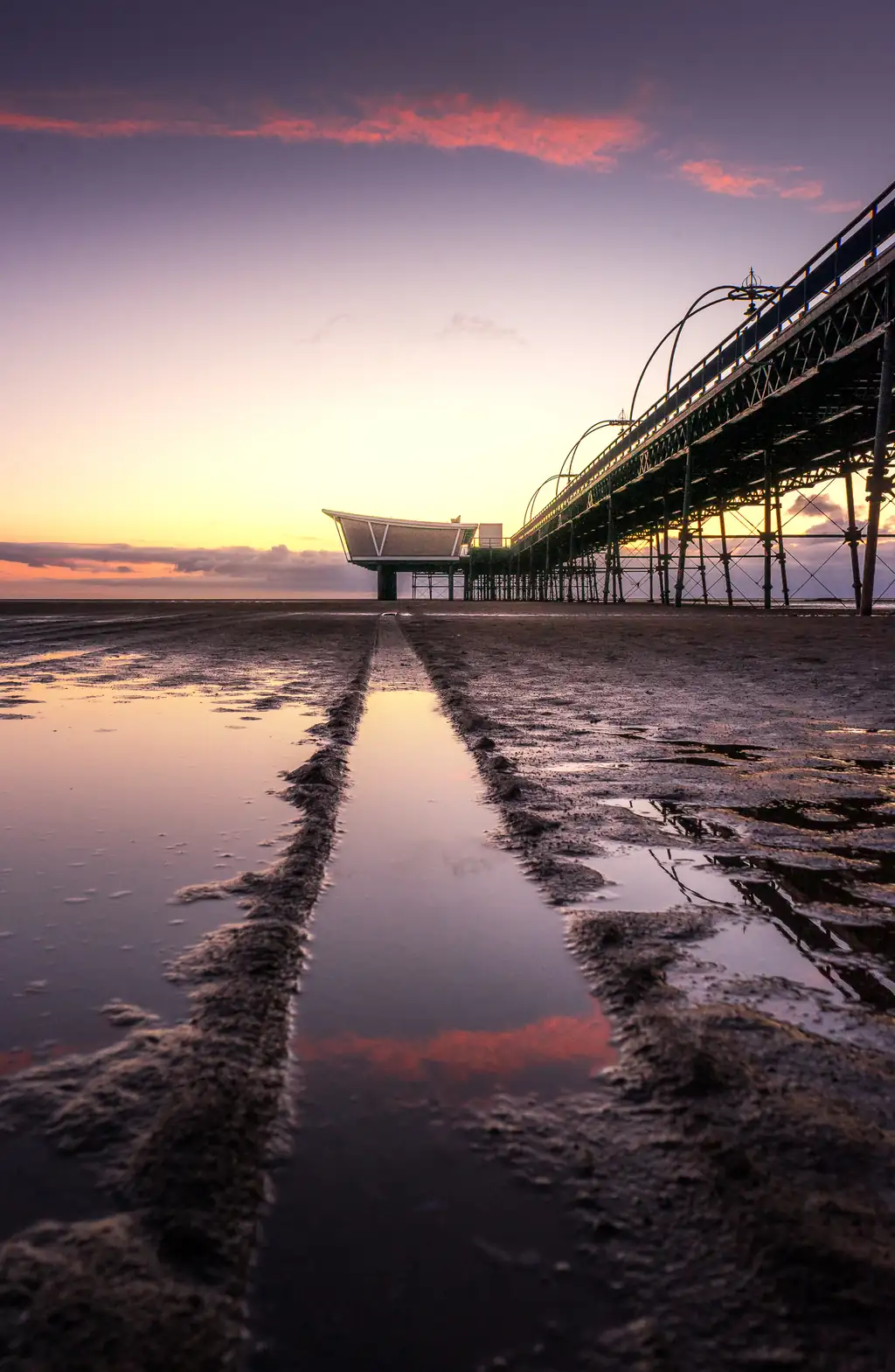
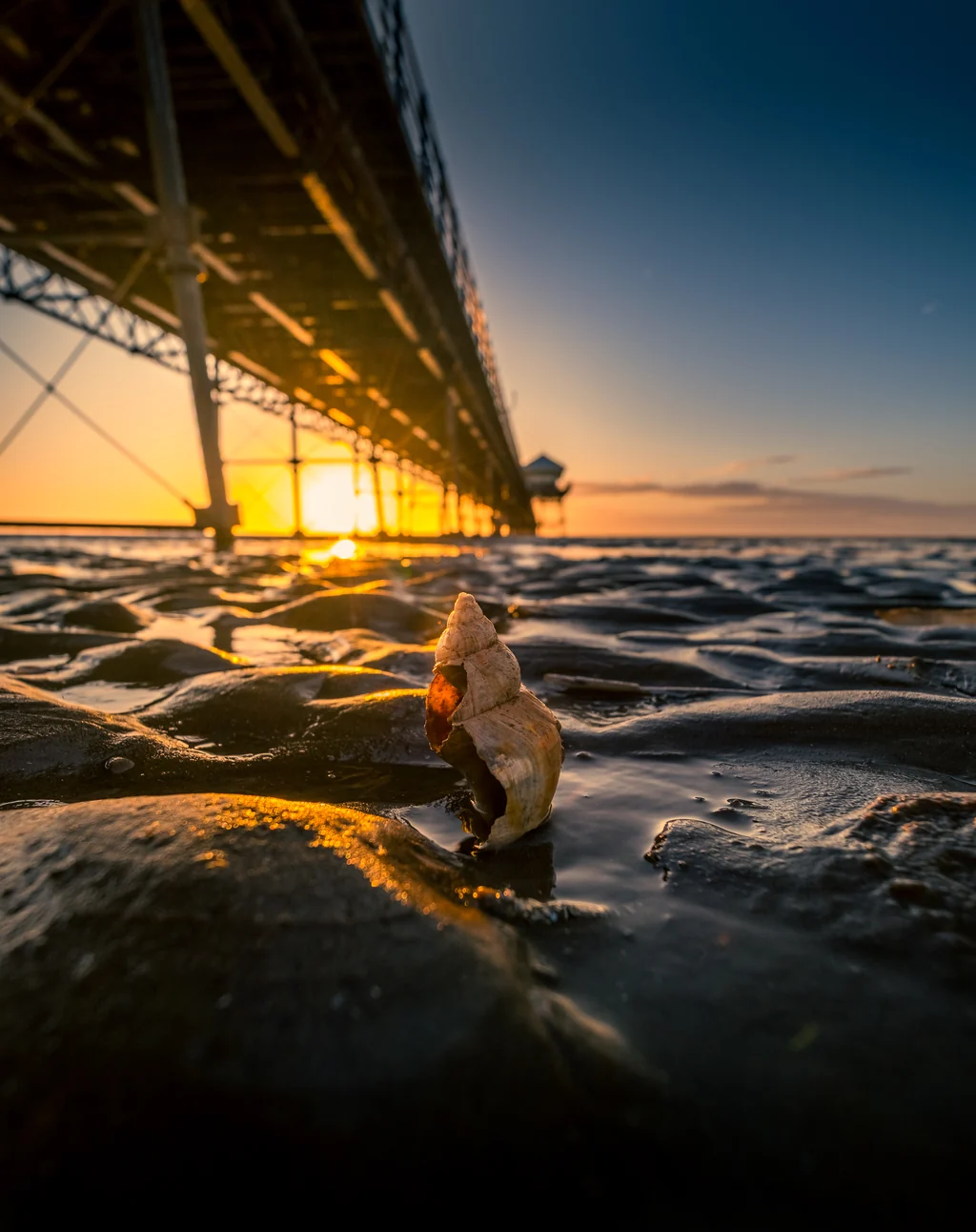
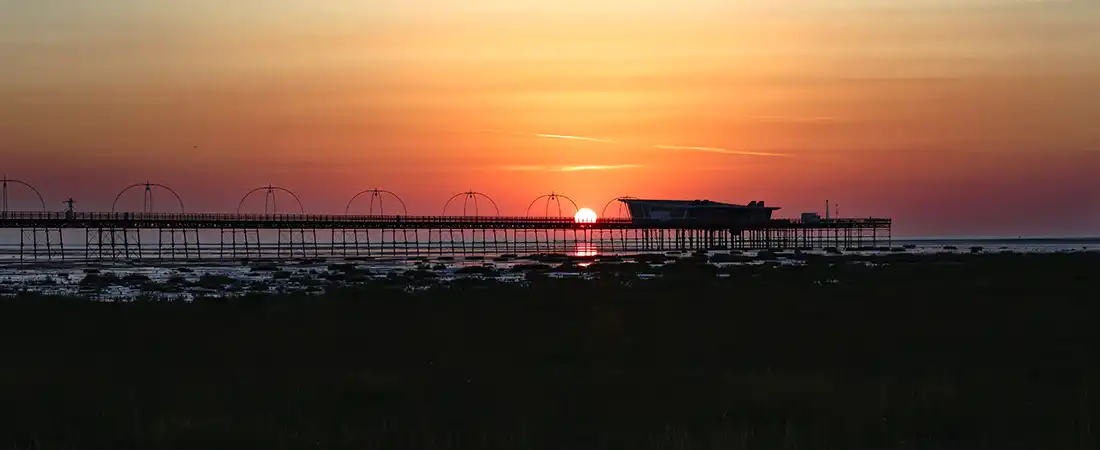
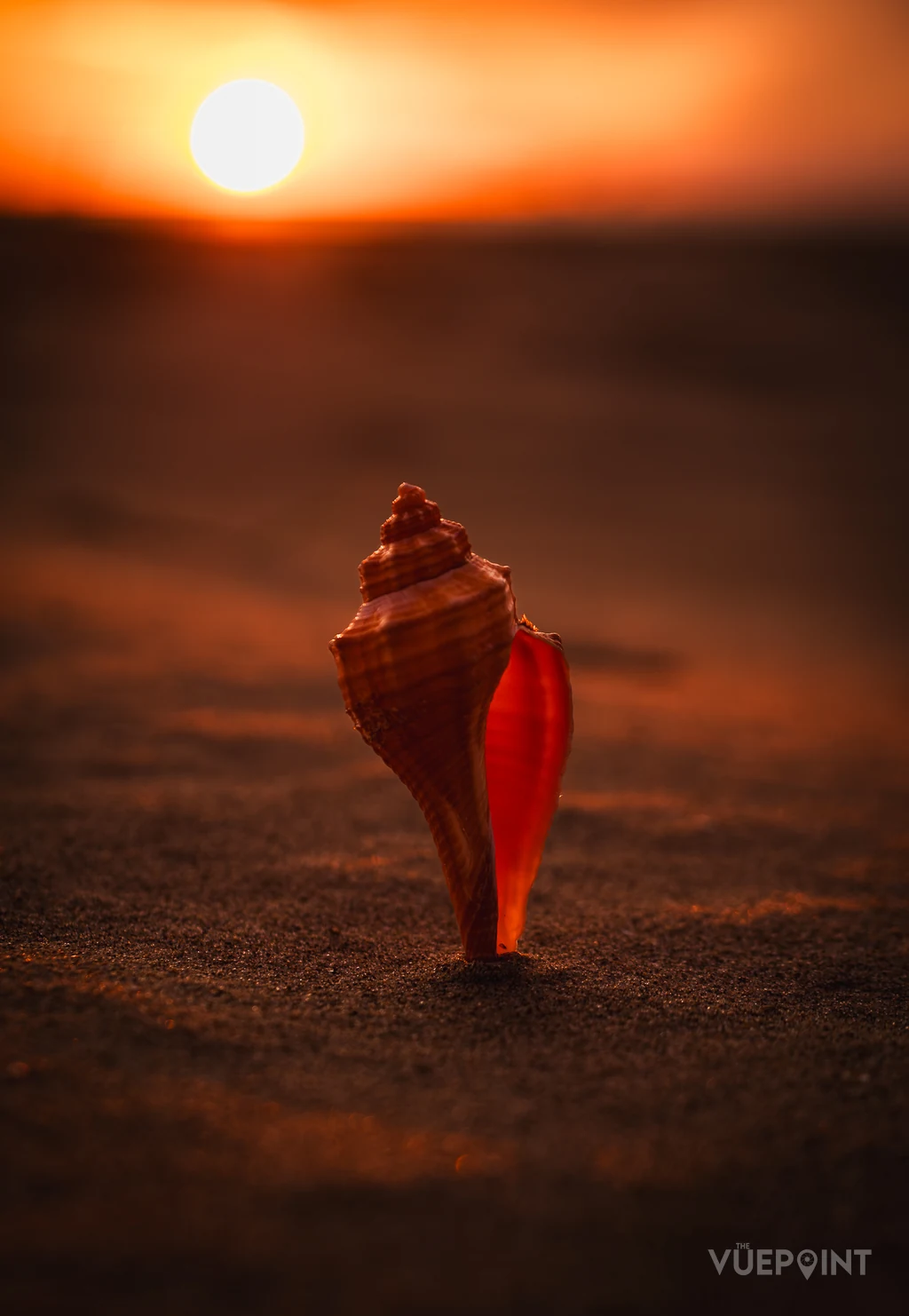
Put something in front of it instead. The pier. A person. A tree. A shell standing up in the sand. Backlight turns anything into a shape, and a shape gives the eye somewhere to land.
It also stops the sun burning a hole in the middle of your frame, which is a nice bonus.
One safety note, because it matters more than the picture: don’t stare at the sun through an optical viewfinder. Compose on the back screen. Long stretches pointed at the sun aren’t great for a sensor either.
Expose for the sky, not the sand
This is the one that changes everything.
The sky is enormously brighter than the ground. You can’t have both, so pick the sky. A dark foreground can be lifted later. A blown-out sky is gone forever — there’s simply no information left in it to recover.
Shoot in aperture priority if you like a quiet life, manual if you’re feeling brave. Either way you’re after the same thing: control over how much light gets in.
Then use a small aperture. F/16 to f/22. It holds the brightness back, and it’s what turns the sun into that spiky starburst everyone loves.
If the result isn’t quite right, nudge it. Exposure compensation up for brighter, down for darker. In manual you’ll be changing shutter speed or ISO instead.
When you genuinely can’t have both
Sometimes the range is just too much. The sky is right, the beach is a black void, and no amount of nudging fixes it.
Bracket it. Three frames — one as metered, one darker, one brighter. Most cameras will do this on their own if you go looking for AEB in the menu. Then merge them in Lightroom afterwards and you’ve got the whole range in one file.
It sounds like a faff. It takes about four seconds.
Two things about white balance and focus
Leave white balance on auto and it will try to be helpful. It looks at all that warmth, decides it’s a mistake, and cools it down. All the colour you turned up for, politely removed. Set it to cloudy or shade instead — both warm things up.
Don’t focus on the sun. There’s no edge there for the camera to grab, so it’ll hunt about and give up. Focus on your foreground shape instead. Move the focus point onto it rather than focusing centrally and swinging the camera.
The bit most people miss
Everyone packs up when the sun goes down. This is madness.
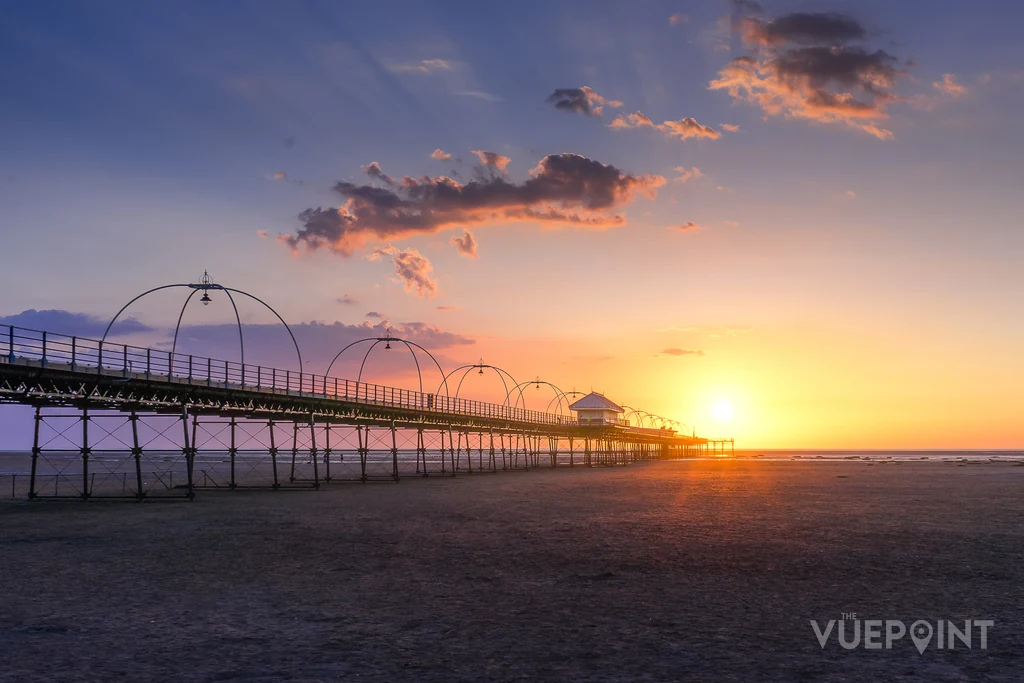
You’ve got maybe ten or fifteen minutes after it disappears where the light is at its absolute best. The harsh source has gone, so the sky glows evenly and the colour goes deep. Then the blue hour arrives and the whole thing turns cool and quiet.
I’ve made more photographs I’m pleased with in that half hour than in the hour before it. Stay put. Let the people with the good tripods walk back to the car park.
So, the running order
- Clean the glass.
- Find your shape and put the sun behind it.
- Small aperture, expose for the sky.
- Cloudy or shade white balance.
- Focus on the shape, never the sun.
- Bracket when the range beats you.
- Don’t leave.
None of this is difficult. It’s mostly just knowing that your camera is going to lie to you, and deciding in advance which lie you’re prepared to live with.
There’s no such thing as bad light. Only an inflexible photographer.
Thanks for reading. If it was useful, come and say hello — I post the photographs that do not make it onto here, and I answer everything.
— Stephen